
Sri Lanka has recently faced many environmental issues, especially floods and landslides in wet zones and hilly areas. Because of this reason, many people now ask an important question before buying land or building a house: “Is this land safe?”
This is where the National Building Research Organisation (NBRO) helps. NBRO checks land in high-risk areas and decides whether it is safe for construction.
As a responsible real estate partner, safety always comes first for us. In this article, we explain what NBRO is, why NBRO approval is needed in some areas and how you can get this certificate to protect your investment and future.
What is NBRO?
NBRO (National Building Research Organisation) is a government research institute in Sri Lanka that works under disaster management and defence-related authorities. A main responsibility of them is to study land conditions and reduce risks related to landslides, mainly in hilly and high-rainfall areas. NBRO plays an important role in identifying dangerous areas and helping people build safely.
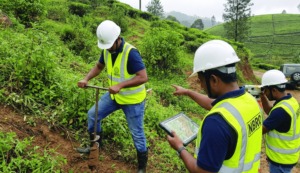
NBRO does many types of work such as testing building materials and monitoring environmental conditions. However, when it comes to real estate, their most important service is geotechnical assessment. In simple terms, NBRO has qualified engineers and scientists who study the soil, slope and overall stability of a land to check whether it is safe to build on.
You may sometimes see the name NBRI on NBRO’s official website. NBRI stands for National Building Research Institute which refers to the research and institutional arm of NBRO. Both NBRO and NBRI represent the same government authority.
Why is NBRO Certification So Important?
Many people think government approvals are just paperwork, but NBRO clearance is different. It is a document that can protect lives and investments. Here’s why it is so important:
- Required by Law
In areas identified as landslide-prone, you cannot get approval to build a house or subdivide land without an NBRO clearance. Local authorities such as the Pradeshiya Sabha, Urban Council or Municipal Council will not issue permits unless this certificate is provided. - Reducing Risk
NBRO experts look for risks that are not easy to see. They study soil strength, slopes, underground water movement and rock stability. If NBRO approves the land, it means the risk of landslides is considered low. - Protecting Your Investment
Building a house or purchasing land is one of major financial commitments. Without proper checks, heavy rain or monsoon conditions can cause serious damage. NBRO approval gives confidence that the land is suitable for construction and helps protect your investment. - Better Resale Value
Land or houses with NBRO approval are easier to sell and keep their value. Today, many buyers ask for this certificate before purchasing. Banks and insurance companies also often require NBRO clearance before approving loans or insurance in hilly areas.
Who Needs NBRO Clearance?
It will be required for new constructions and land subdivisions in areas vulnerable to landslides and it mainly applies to these districts:
- Kandy
- Matale
- Nuwara Eliya
- Badulla
- Kegalle
- Ratnapura
- Kalutara
- Galle
- Matara
- Hambantota
Note: Even if a property is outside these districts, some high-risk areas such as parts of Kurunegala or Monaragala may still require an NBRO assessment. It’s always best to check with your local authority before buying land or starting construction.
How to Get an NBRO Clearance Certificate (A Step by Step Guide)
Step 1: Get the Application
Visit your local authority (Municipal Council, Urban Council or Pradeshiya Sabha) or the nearest NBRO district office. Then ask for the “Landslide Risk Assessment Application”.
Step 2: Prepare the Required Documents
You will usually need the following documents:
- Survey Plan: 2 copies of a recent survey plan (usually within the last 10 years) prepared by a licensed surveyor.
- Deed: A copy of the land deed.
- Contour Plan: This may be required for steep or sloping land
- Building Plans: Architectural drawings if you are applying to build a house or building
Step 3: Submit the Application & Then Pay Fees
Submit the completed application to your local authority. They will forward it to NBRO. You will have to pay an inspection fee.
The amount depends on the size of the building and whether it is residential or commercial.
Step 4: The Field Inspection
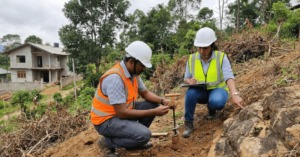
This is the most important step. NBRO experts will visit your land and check:
- Slope angle
- Soil composition
- Drainage patterns (where the rainwater goes)
- History of instability in the area
Step 5: Receive the NBRO Report
After the inspection, NBRO will issue a report, usually within a few weeks. There are three possible results:
- Clearance Granted (The land is safe, and you can continue with construction)
- Conditional Clearance (You can build, but you must follow certain safety guidelines such as adding retaining walls, special foundations or better drainage)
- Rejection (The land is not safe for construction. While disappointing, this decision protects you from serious future risks)
Frequently Asked Questions (F&Qs):
- What is NBRO?
NBRO is a government institute in Sri Lanka that is responsible for assessing land stability, managing landslide risks and for ensuring safe construction in vulnerable areas. They do surveys and provide clearance certificates by helping both property buyers and builders to make informed decisions.
- What is NBRO approval?
NBRO approval is an official clearance from the National Building Research Organisation which confirms that a particular land or property is safe for construction after a thorough assessment of its soil and geological stability.
- Is NBRO approval mandatory in Sri Lanka?
Yes, It is legally required for construction or land subdivision in landslide-prone areas such as Kandy, Nuwara Eliya and Badulla. Local authorities will not grant a building permission without this certificate.
- Why is NBRO approval important when buying land?
It ensures the land is not at high risk of landslides or ground instability. It protects lives, prevents structural damage and secures financial investment for you before construction begins.
- Which areas in Sri Lanka require NBRO clearance?
NBRO clearance is required mainly in the following districts:
- Kandy
- Matale
- Nuwara Eliya
- Badulla
- Kegalle
- Ratnapura
- Kalutara
- Galle
- Matara
- Hambantota
Some high-risk areas outside these districts may also require assessment.
- Do I need NBRO approval just to buy land?
Not always. However, if you plan to build, subdivide or apply for a building permit in designated risk areas, NBRO approval will be required. It is highly recommended to check this before purchasing land.
- Can I get a housing loan without NBRO clearance?
In many cases, banks and insurance companies require NBRO clearance before approving home loans or property insurance, mainly for properties in hilly or landslide-prone areas.
- How long does it take to get an NBRO certificate?
The process usually takes a few weeks depending on the location, weather and inspection workload. More complex sites may take a little longer.
Summary
In today’s environment, safety should never be ignored. An NBRO certificate is more than just a legal requirement, it is a safety assurance for your land and home.
If you are planning to buy land in Kandy or any hill country area, always ask whether NBRO clearance has already been obtained. If not, make sure your purchase depends on getting this approval before moving forward.
Build wisely, stay safe and protect your investment for the future.